Introduction
Welcome to the final episode of Chapter 7! In this culminating lesson, we'll bring together everything we've learned about HTML Canvas to create a complete drawing application. Our app will feature:
- Color selection with a color picker
- Adjustable brush sizes
- A clear button to reset the canvas
- The ability to save your artwork as an image
Let's see how the McTweak team approaches this exciting final project!
The McTweak Team's Drawing App Challenge
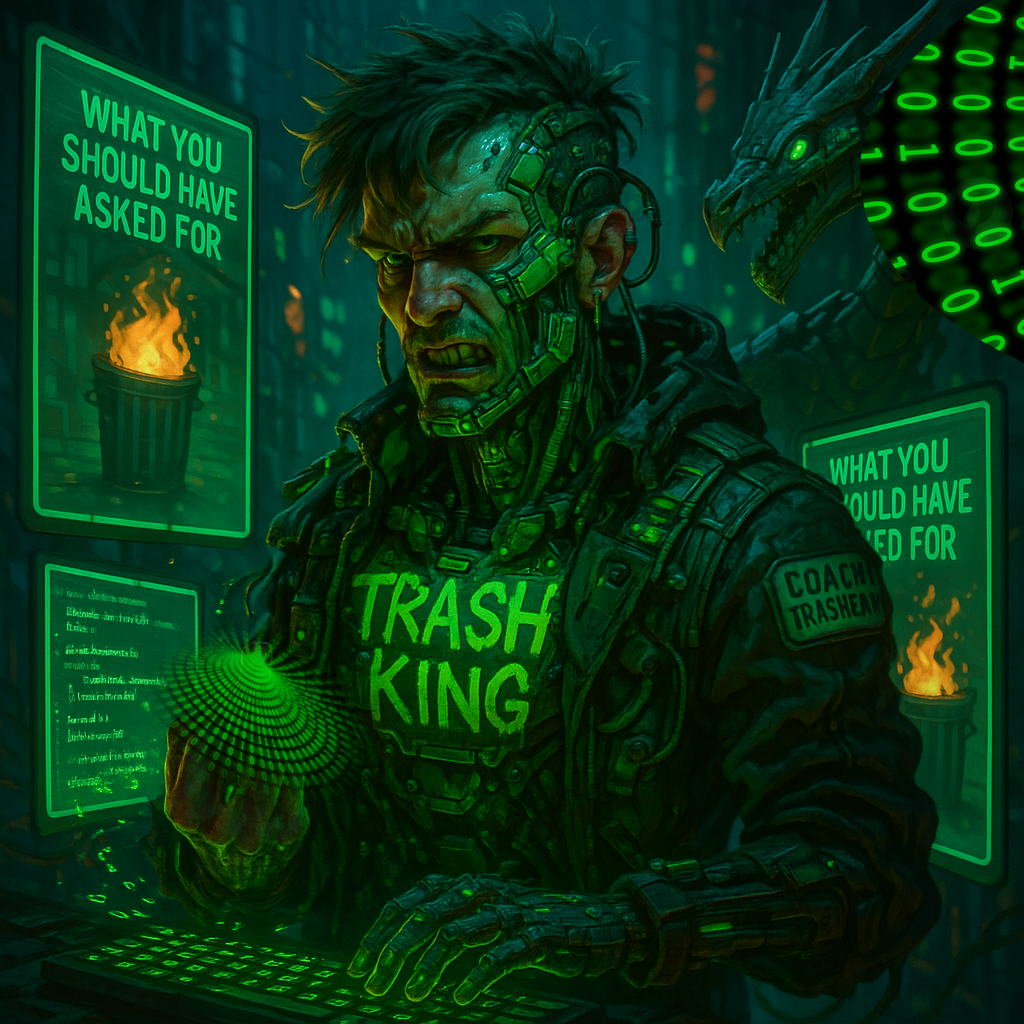
[finger-painting wildly]
I CALL THIS ONE "DIGITAL DREAMS IN AN ANALOG NIGHTMARE!" It represents the existential struggle of pixels trying to break free from their two-dimensional prison! [holds up paper with random colorful blotches]
[examining a donut with artistic scrutiny]
As you can see, I've pioneered a new art technique—Donut Expressionism. The bite marks represent society's consumption of technology, while the sprinkles signify the fragmenting of digital consciousness. [takes another bite] This is a limited-time exhibit, as it's rapidly... disappearing.
[sighs, still working on the drawing app interface]
Our final project is a DIGITAL drawing app, not whatever... food performance art you're doing over there.
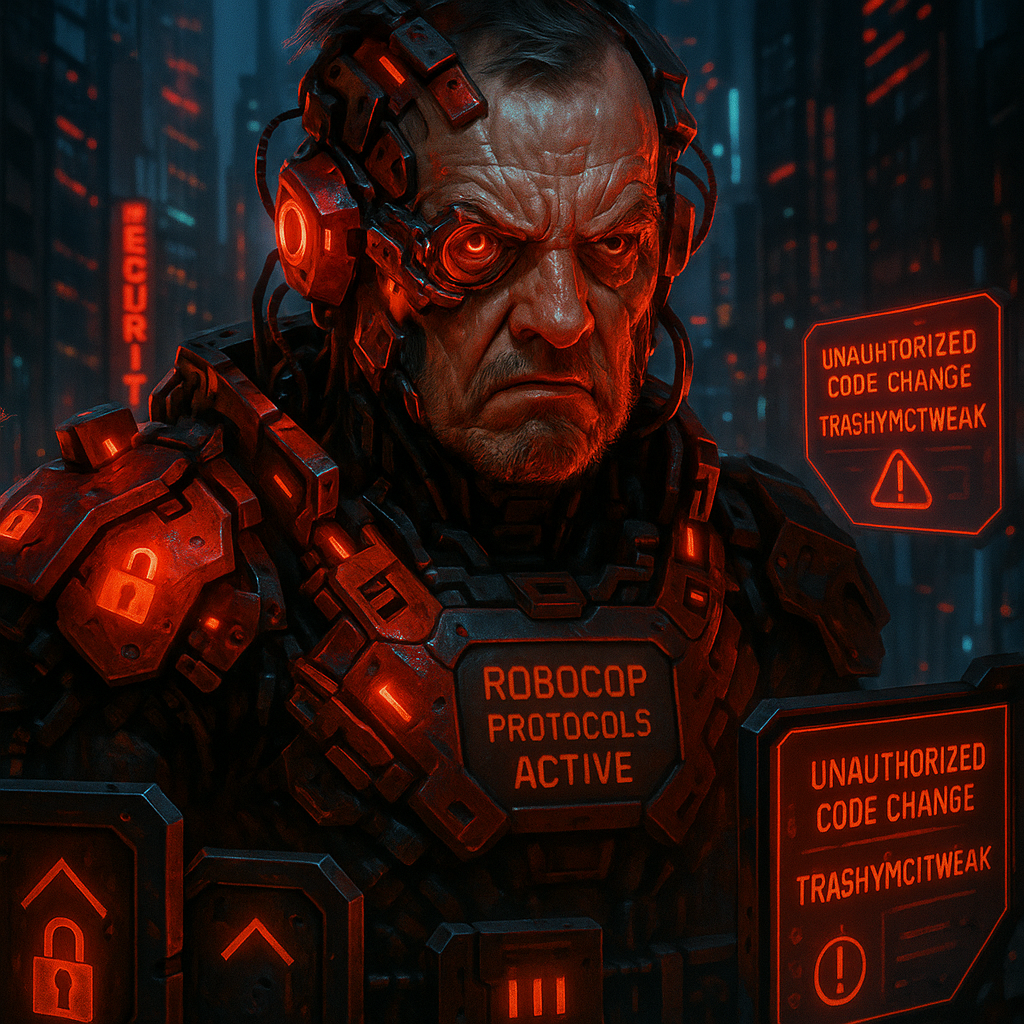
[frantically reviewing code]
THIS COLOR PICKER CODE IS A SECURITY CATASTROPHE! What if someone selects a color SO BRIGHT it causes retinal damage?! Have you implemented a LEGALLY-BINDING waiver for users who choose neon colors?! WHO APPROVED UNLIMITED COLOR SELECTION WITHOUT A SAFETY COMMITTEE REVIEW?!
[trying to wipe paint off his keyboard]
I think I've got the brush size slider working, but every time I test it, my cursor gets bigger and I can't click anything smaller than the entire screen. Is that... normal?
[walking in with a tablet]
The client specified very clear requirements for this project: color selection, adjustable brush sizes, a clear button, and the ability to save images. Our current implementation offers... [looks at TRASHY's finger paintings and FATTY's half-eaten donuts] ...abstract food-based performance art?
[jumping up excitedly]
WAIT! I just had an EPIPHANY! What if we make a drawing app where you can't actually CHOOSE what you draw? The computer decides FOR you! It's like a commentary on the illusion of free will in the digital age!
[deadpan]
That's called a broken app, Trashy.
[indignantly]
Excuse me, but I've been conducting critical user experience research! [holds up donut] For example, I've discovered that users prefer circular brush tools over square ones. My methodology is extremely rigorous and delicious.
[eyeing a color picker suspiciously]
Do you realize that allowing users to select RGB values introduces exactly 16,777,216 potential security vulnerabilities? ONE FOR EACH COLOR! We should restrict the palette to fifty pre-approved, security-hardened shades of GRAY!
[exasperated]
Gray? For a drawing app?
[defensively]
FIFTY SHADES SHOULD BE MORE THAN ENOUGH FOR ANY RESPONSIBLE ARTIST!
[trots in, followed by GARBAGE who surveys the artistic chaos with a pained expression]
[looking at the mess]
I see we're taking a very... hands-on approach to building a digital drawing application.
[proudly]
I'm exploring the tactile aspects of the user experience!
[picking up one of TRASHY's paintings]
This looks like you let a hyperactive squirrel loose on a canvas after feeding it espresso beans.
[beaming]
THANK YOU! That's EXACTLY the aesthetic I was going for!
Building the Drawing App: Essential Components
[sitting at the computer]
Let's focus on what matters. A drawing app needs four key components: a color selection system, brush size control, a way to clear the canvas, and a way to save your work.
[taking notes]
So... not donut expressionism?
[mouth full]
Art critics are so closed-minded these days.
1. Setting Up the Canvas
First, we need to set up our HTML structure with a canvas element and controls:
<!-- HTML Structure -->
<div class="drawing-app">
  <canvas id="drawingCanvas" width="800" height="500"></canvas>

  <div class="controls">
    <div class="control-group">
      <label for="colorPicker">Color:</label>
      <input type="color" id="colorPicker" value="#000000">
    </div>

    <div class="control-group">
      <label for="brushSize">Brush Size:</label>
      <input type="range" id="brushSize" min="1" max="50" value="5">
      <div id="brushPreview"></div>
    </div>

    <button id="clearCanvas">Clear Canvas</button>
    <button id="saveImage">Save Image</button>
  </div>
</div>[already coding]
First, we need an intuitive color picker that gives users full RGB control while remaining user-friendly.
[nodding]
I've been working on that. A color wheel with sliders for fine adjustments works well for most users.
2. Implementing the Drawing Functionality
Now let's set up JavaScript to handle drawing on the canvas:
// Drawing App JavaScript
const canvas = document.getElementById('drawingCanvas');
const ctx = canvas.getContext('2d');

// Variables to track drawing state
let isDrawing = false;
let lastX = 0;
let lastY = 0;

// Set initial styles
ctx.lineCap = 'round'; // Round line ends
ctx.lineJoin = 'round'; // Round joins between lines
ctx.strokeStyle = '#000000'; // Default: black
ctx.lineWidth = 5; // Default: 5px

// Drawing functions
function startDrawing(e) {
  isDrawing = true;
  [lastX, lastY] = [e.offsetX, e.offsetY];
}

function draw(e) {
  if (!isDrawing) return; // Stop if not drawing

  // Begin a new path
  ctx.beginPath();

  // Start from
  ctx.moveTo(lastX, lastY);

  // Draw line to current position
  ctx.lineTo(e.offsetX, e.offsetY);

  // Apply the stroke
  ctx.stroke();

  // Update last position
  [lastX, lastY] = [e.offsetX, e.offsetY];
}

function stopDrawing() {
  isDrawing = false;
}

// Add event listeners for mouse/touch
canvas.addEventListener('mousedown', startDrawing);
canvas.addEventListener('mousemove', draw);
canvas.addEventListener('mouseup', stopDrawing);
canvas.addEventListener('mouseout', stopDrawing);

// Touch support for mobile devices
canvas.addEventListener('touchstart', function(e) {
  const touch = e.touches[0];
  const mouseEvent = new MouseEvent('mousedown', {
    clientX: touch.clientX,
    clientY: touch.clientY
  });
  canvas.dispatchEvent(mouseEvent);
});

// Similar touch event handlers for move and end...[continuing]
Next, brush size control. Simple slider interface, with visual feedback showing the current brush size.
[relieved]
That makes more sense than my approach of "click and hope for the best."
3. Color Selection
Let's implement the color selection feature:
Note from Grumpy: Colors are dangerous! Please implement with caution and wear protective eyewear when using neon colors.
// Color Selection
const colorPicker = document.getElementById('colorPicker');

colorPicker.addEventListener('input', function() {
  // Update the stroke color
  ctx.strokeStyle = colorPicker.value;
});

// Optional: Add preset colors
function setupColorPresets() {
  const presets = [
    '#000000', '#ffffff', '#ff0000', '#00ff00',
    '#0000ff', '#ffff00', '#ff00ff', '#00ffff'
  ];

  const presetContainer = document.getElementById('colorPresets');

  presets.forEach(color => {
    const colorButton = document.createElement('button');
    colorButton.className = 'color-preset';
    colorButton.style.backgroundColor = color;

    colorButton.addEventListener('click', () => {
      colorPicker.value = color;
      ctx.strokeStyle = color;
    });

    presetContainer.appendChild(colorButton);
  });
}[typing]
For clearing the canvas, a simple button with confirmation to prevent accidental erasure.
[still concerned]
But what about MALICIOUS CLEARING? We need at least THREE forms of verification and possibly a retinal scan!
4. Brush Size Control
Now let's implement the brush size control:
// Brush Size Control
const brushSlider = document.getElementById('brushSize');
const brushPreview = document.getElementById('brushPreview');

function updateBrushPreview() {
  const size = brushSlider.value;

  // Update the stroke width
  ctx.lineWidth = size;

  // Update the preview circle
  brushPreview.style.width = size + 'px';
  brushPreview.style.height = size + 'px';
  brushPreview.style.backgroundColor = colorPicker.value;
}

// Update when the slider changes
brushSlider.addEventListener('input', updateBrushPreview);

// Update when color changes too
colorPicker.addEventListener('input', updateBrushPreview);

// Initialize preview
updateBrushPreview();
5. Clear Canvas Function
Let's implement the clear canvas functionality:
// Clear Canvas
const clearButton = document.getElementById('clearCanvas');

clearButton.addEventListener('click', function() {
  // Ask for confirmation
  const confirmed = confirm('Are you sure you want to clear the canvas?');

  if (confirmed) {
    // Clear the entire canvas
    ctx.clearRect(0, 0, canvas.width, canvas.height);
  }
});[typing]
And finally, saving the artwork. We'll use the Canvas toDataURL method to convert it to an image format like PNG.
6. Save Image Functionality
Finally, let's implement the save functionality:
// Save Image
const saveButton = document.getElementById('saveImage');

saveButton.addEventListener('click', function() {
  // Create a temporary link
  const link = document.createElement('a');

  // Set download name
  link.download = 'my-drawing.png';

  // Convert canvas to data URL (PNG format)
  link.href = canvas.toDataURL('image/png');

  // Trigger download by simulating click
  link.click();
});[reviewing the code]
This covers all the client requirements while keeping the interface intuitive. Good work.
[approaches the computer curiously, tail wagging slightly]
Drawing App Demo
Try out our completed drawing application! Draw something, change colors and brush sizes, clear the canvas, and save your artwork.
[watching GARBAGE code]
But where's the innovation? The disruption? The premium experience?
[without looking up]
Sometimes the best user experience is one that gets out of the way and lets people create without friction. Not everything needs to be "disrupted," especially tools for creativity.
[impressed]
That's... surprisingly insightful.
[looking at the emerging drawing app]
But can it make EXPLOSIONS when you draw too fast? Or maybe the brush could leave a TRAIL OF FIRE?
[sighing]
As an optional feature, perhaps. But the core functionality comes first.
Enhancing Your Drawing App
Now that we have a working drawing app with all the required features, let's explore some ways you can enhance it:
1. Undo/Redo Functionality
// Store canvas states for undo/redo
let undoStack = [];
let redoStack = [];

function saveState() {
  // Max 10 states to prevent memory issues
  if (undoStack.length >= 10) {
    undoStack.shift(); // Remove oldest state
  }

  // Save current state
  undoStack.push(canvas.toDataURL());

  // Clear redo stack
  redoStack = [];
}

function undo() {
  if (undoStack.length === 0) return;

  // Save current state to redo stack
  redoStack.push(canvas.toDataURL());

  // Load previous state
  const img = new Image();
  img.src = undoStack.pop();
  img.onload = function() {
    ctx.clearRect(0, 0, canvas.width, canvas.height);
    ctx.drawImage(img, 0, 0);
  };
}
2. Different Brush Types
// Add different brush types
const brushTypes = {
  normal: function(e) {
    // Standard brush (current implementation)
    ctx.beginPath();
    ctx.moveTo(lastX, lastY);
    ctx.lineTo(e.offsetX, e.offsetY);
    ctx.stroke();
  },

  spray: function(e) {
    // Spray/airbrush effect
    const density = 50;
    const radius = ctx.lineWidth;

    for(let i = 0; i < density; i++) {
      const angle = Math.random() * Math.PI * 2;
      const r = Math.random() * radius;

      const x = e.offsetX + r * Math.cos(angle);
      const y = e.offsetY + r * Math.sin(angle);

      ctx.beginPath();
      ctx.arc(x, y, 0.5, 0, Math.PI * 2);
      ctx.fill();
    }
  },

  calligraphy: function(e) {
    // Simulated calligraphy pen
    const angle = Math.atan2(e.offsetY - lastY, e.offsetX - lastX) + Math.PI/4;

    // Save context state
    ctx.save();

    // Set line width based on angle
    ctx.lineWidth = (Math.abs(Math.cos(angle)) * 10) + 1;

    // Draw the line
    ctx.beginPath();
    ctx.moveTo(lastX, lastY);
    ctx.lineTo(e.offsetX, e.offsetY);
    ctx.stroke();

    // Restore context
    ctx.restore();
  }
};[paws at the screen, seemingly drawing something with her nose]
[amazed]
Is... is Snowzie actually using the app?
[smiling slightly]
The ultimate user test. If an elkhound can use your interface, you've done something right.
[suddenly inspired]
WAIT! What if we add a "Paint Like An Elkhound" filter?!
Further Enhancements
Symmetry Drawing
Implement mirroring functionality to create symmetrical drawings. This can be horizontal, vertical, or radial (around a center point).
Layers Support
Add support for multiple drawing layers, allowing users to work on different elements independently and rearrange their order.
Filters and Effects
Implement image processing filters like blur, brightness adjustment, or fun effects like pixelation or "impressionist" style.
Shape Tools
Add tools for drawing perfect circles, rectangles, and straight lines to complement the freehand drawing.
[to audience]
And that's how we build a complete drawing application. By combining everything we've learned about canvas—from basic shapes to colors, lines, and saving images—we can create a tool that lets users express their creativity. Even if they're not all creating... donut expressionism.
[offended]
You just don't understand my artistic vision!
[barks happily at her digital creation—a simple but recognizable drawing of what might be a dog... or possibly a very furry horse]
[to audience]
Now let's put all these pieces together to create our final project: a complete drawing app with color selection, brush size options, clear functionality, and image saving.
[ceremoniously, holding up his last donut]
THE CODE IS COMMITTED!
Summary
In this lesson, we've learned how to:
- Set up a canvas for a drawing application
- Implement color selection with HTML5 color pickers
- Create brush size controls with sliders
- Add clear canvas functionality with user confirmation
- Save drawings as images using toDataURL
- Enhance our app with additional features like different brush types
With these skills, you can now create interactive drawing applications and build on this foundation to develop more complex canvas-based tools and games.
Congratulations on completing Chapter 7! You've learned all the fundamental skills of drawing with HTML Canvas.